Orders $35+ Ship Free in 2 Business Days • Protective Packaging Standard

  • FAQ
  • Text Pam: 1-989-992-3771
  • Cart (0)
  • Checkout
  • Shop 
    • All Books  
      • Classic Fiction Books
      • Children's Books
      • Cookbooks
      • Poetry Books
      • Paperback Books
      • Anne Rice Books
      • Shop E. Philips Oppenheim Books
      • Anne Rivers Siddons Books
      • Mary Stewart Books
      • Vintage Fantasy Books
      • Elbert Hubbard Books
      • Robert Ludlum Books
      • Vintage Book Bundles
      • Mystery Books
      • Art Books
      • Easton Press Collection
      • Medical Books
      • History Books
      • Military History & Fiction Books
      • Vintage Sci-Fi Books
      • Maritime Books
      • How-To Books
      • Photography Books
      • Dance Books
      • Sports Books
      • Golf Books
      • Ephemera
      • Reading Journals & Blank Keepsake Books
      • Shop Nature Books
      • Fishing & Hunting
      • Birding Books & Field Guides
      • Western Books
      • Vintage Comic Books
    • All Collectables 
      • Vintage Glass
      • Vintage Kitchenware
      • Shop Vintage Recipe Boxes
      • Vintage Home Decor
      • Bundles & Lots
      • Barware & Breweriana
      • Vintage Patches
      • Beatrix Potter Figurines
      • Memorabilia & Rare Ephemera
      • Shop Bookends
      • Collectible Pins & Vintage Jewelry
      • Monthly Spotlight: Vintage Collectables
      • Bookish Digital Downloads
  • Shop 
    • All Books  
      • Classic Fiction Books
      • Children's Books
      • Cookbooks
      • Poetry Books
      • Paperback Books
      • Anne Rice Books
      • Shop E. Philips Oppenheim Books
      • Anne Rivers Siddons Books
      • Mary Stewart Books
      • Vintage Fantasy Books
      • Elbert Hubbard Books
      • Robert Ludlum Books
      • Vintage Book Bundles
      • Mystery Books
      • Art Books
      • Easton Press Collection
      • Medical Books
      • History Books
      • Military History & Fiction Books
      • Vintage Sci-Fi Books
      • Maritime Books
      • How-To Books
      • Photography Books
      • Dance Books
      • Sports Books
      • Golf Books
      • Ephemera
      • Reading Journals & Blank Keepsake Books
      • Shop Nature Books
      • Fishing & Hunting
      • Birding Books & Field Guides
      • Western Books
      • Vintage Comic Books
    • All Collectables 
      • Vintage Glass
      • Vintage Kitchenware
      • Shop Vintage Recipe Boxes
      • Vintage Home Decor
      • Bundles & Lots
      • Barware & Breweriana
      • Vintage Patches
      • Beatrix Potter Figurines
      • Memorabilia & Rare Ephemera
      • Shop Bookends
      • Collectible Pins & Vintage Jewelry
      • Monthly Spotlight: Vintage Collectables
      • Bookish Digital Downloads
The Vintage Book Addicts Blog

What Are the Best Details to Check Before Trusting an Old Book You Cannot Hold First?

May 27, 2026

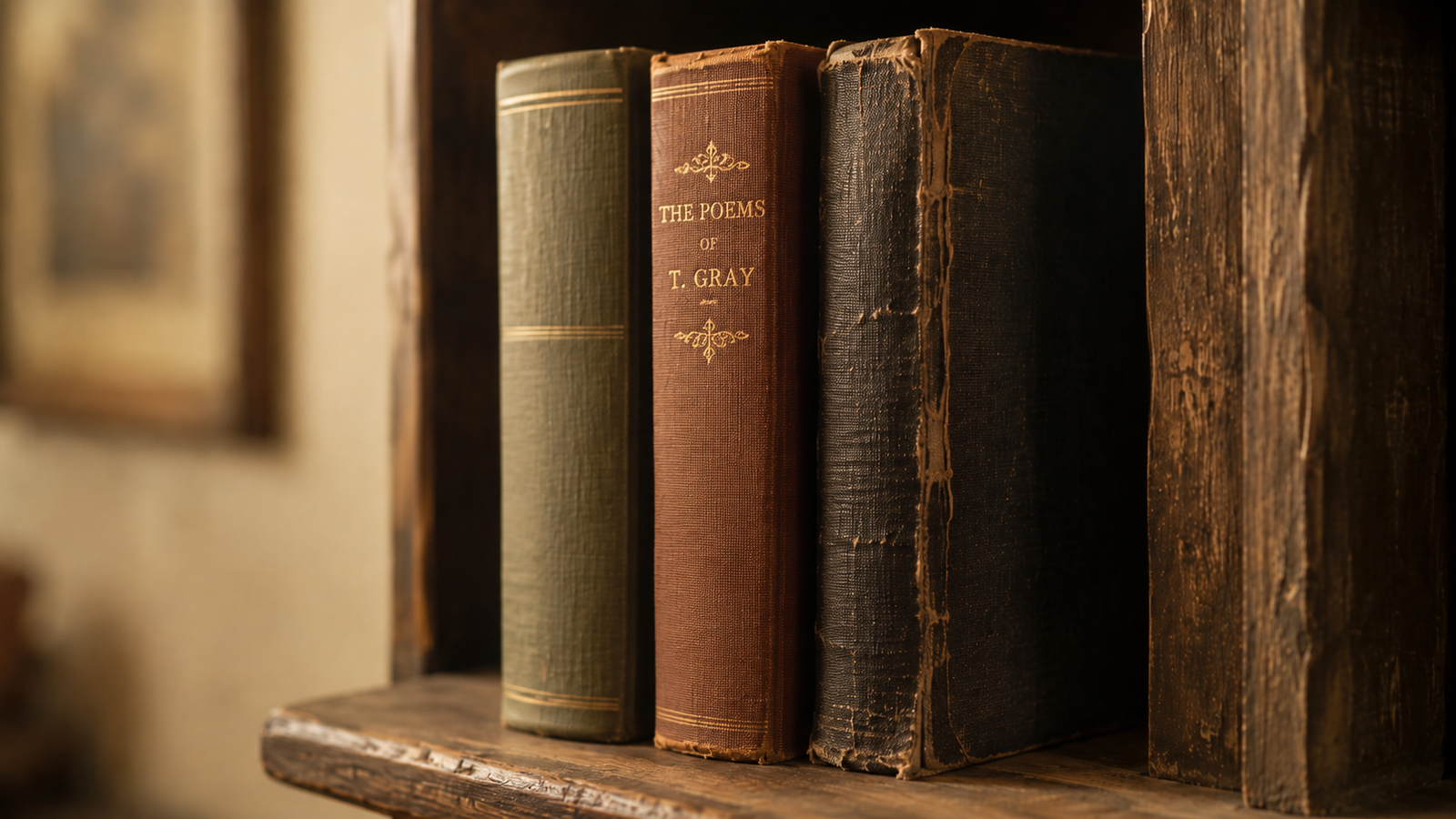
Three vintage hardcover books on a shelf showing different spine conditions from clean to worn to damaged.

When you cannot hold the book, the details have to do the work.

By Pam | Reading Vintage


Someone found the book they have been looking for. Maybe it is a cookbook their mother used. Maybe it is a childhood favorite they have been hunting for years. The listing shows up in search and it looks right — right title, right cover, right era. The price is reasonable. The seller has decent feedback.

And then it arrives. The smell is wrong. The binding is cracked. There is a water stain across four pages that was never mentioned. It goes back in a box. Or, worse, it stays on the shelf as a quiet disappointment.

This happens more than it should. Not because sellers are always dishonest. Sometimes they just do not know what to look for. Sometimes they describe things the way they want them to be, not the way they are. And sometimes a buyer asked the wrong questions, or none at all, because they did not know what mattered.

So here is the direct answer to the question: the best details to check before trusting an old book online are the spine, the smell, missing pages, writing and inscriptions, stains and water damage, the title page and edition details, the quality and honesty of the photos, and the seller's clarity. Those eight things, looked at carefully, will tell you most of what you need to know before you commit to a purchase you cannot reverse by smell-test.

Walk through each one.

7 Key Takeaways

  1. Spine and binding condition is the single most important structural detail to verify before buying vintage online.
  2. Smell cannot be photographed, but it can and should be disclosed. Ask directly if the listing does not mention it.
  3. Missing pages are a quiet deal-breaker. A book that cannot be read fully is not a reading copy.
  4. Writing and inscriptions inside a book are not automatically bad — context matters. Ask about what is there.
  5. Photos of the actual book are non-negotiable. Stock images or unclear shots are a reason to pause.
  6. Honest sellers describe what they see, including the things that are less than perfect. That is what you are looking for.
  7. Availability is not the same as the right copy. A listing that checks none of these boxes is still just availability.

The Problem With Buying Old Books You Cannot Hold

Physical vintage book shopping is easy in one specific way: you know immediately. You pick it up. You open it. You know if the smell is wrong before you get to the title page. You can feel whether the spine is tight or broken. You can see the actual condition of the pages without relying on someone else's interpretation of the word "good."

Online is different. Online requires translation. The seller has to know what matters, photograph what matters, and describe what matters — and the buyer has to know how to read what they are seeing and ask for the rest.

That gap is where disappointments happen. A 2023 report on the used and collectible book market found that condition-related complaints represent the majority of buyer dissatisfaction across online bookselling platforms. The books were described as "good" or "acceptable." Those terms mean different things to different sellers.

Here is what I watch for. Not a checklist in the mechanical sense. More like the questions I have learned to ask because I have seen what happens when they go unanswered.

The Eight Details That Tell the Truth About an Old Book

Hands gently opening a worn vintage hardcover book on a wood table, checking condition before buying online.

1. The Spine and Binding

The spine is the structural spine of the whole thing. If it is broken, cracked, or separating from the boards, that is not a cosmetic issue. That is a book that is falling apart.

Light spine wear — some fading, a soft crease along the top or bottom — is normal in a vintage book. Forty years on a shelf leaves marks. What you are watching for is cracking, splitting, boards that have separated from the text block, or a hinge that flexes when it should not. Those things matter. They affect whether the book can be read, displayed, or given as a gift without it looking like it survived something it probably should not have.

Ask for a photo of the spine straight on, and one of the inside front hinge where the board meets the first page. Those two photos will tell you a lot. If the seller does not know what you mean, that is also useful information.

2. The Smell

You cannot smell a book through a screen. But smell matters more than almost any other condition detail in a vintage book, and it is one of the most under-disclosed things in online listings.

Normal old-book smell — that slightly sweet, papery, vanilla-and-dust quality — is not a problem. It is familiar and expected and usually stable. What is not stable is mold, smoke, animal, or basement moisture. Those smells do not go away with airing out. They move into everything around the book.

If a listing does not mention smell, ask. A good seller will tell you honestly. A good seller will also tell you if it has been sitting in storage and they are not certain. If the seller deflects or says "it smells fine" without specifics, that is worth noting.

3. Missing Pages

This one sounds obvious but it is easy to miss in a listing photo. A missing page in a regular book means a gap in reading. A missing page in a cookbook means a recipe that does not exist anymore. A missing index page in a reference book makes the whole thing harder to use.

Ask specifically: are all pages present? Most honest sellers will check if you ask. If they cannot confirm, that is a real answer too.

4. Writing, Notes, and Inscriptions

Writing inside a vintage book is not automatically a problem. In some books — particularly cookbooks, gift books, and books with a clear history — inscriptions add something. A name and a date inside a 1953 Betty Crocker cookbook is not damage. It is documentation.

What matters is what the writing is, where it is, and how much of it there is. A name on the flyleaf is different from underlining throughout the text. A gift inscription on page one is different from pen corrections on every other page. Ask the seller to describe what is there specifically. "Some writing inside" can mean a lot of different things.

5. Stains and Water Damage

Stains in cookbooks can be part of the story. A few splashes on a recipe page suggest the book was used, which is exactly what a cookbook is for. The question is severity and smell. If the stain has warped the pages, stuck them together, or carries any mustiness, that is a different situation than a light spatter on a recipe for pie crust.

Water damage specifically deserves its own question. A tide line on a few pages from old humidity is common in vintage books. Pages that have wavy, buckled paper suggest the book has been through something wetter than humidity. Ask about it directly: has the book had any water contact? A seller who knows their inventory will have an answer.

6. The Title Page and Edition Details

The title page is where you confirm what you actually have. For most buyers, the exact edition matters less than people think — but for some purchases (a specific childhood edition with specific illustrations, a first printing that needs to match a memory) it matters a great deal.

Ask for a photo of the title page, the copyright page, and if relevant, the illustration pages. The copyright page will show the printing number and date. That information is usually simple to read once you are looking at it, and a good seller should be able to confirm what is there. If the listing just says "vintage" without specifics, the title page photo will settle it.

7. Photos of the Actual Book

This one matters more than almost anything else. Stock photos, representative images, or blurry snapshots are not a substitute for clear photos of the actual book you are being asked to buy.

Good photos for a vintage book should include: the front cover, the back cover, the spine straight on, the inside front hinge, the title and copyright pages, any noted condition issues, and at least one interior spread so you can see the state of the pages. If any of those are missing and the listing does not explain why, it is worth asking before buying.

A seller who photographs condition issues honestly — a corner bump, a pencil mark, a small stain — is a seller who knows what they are doing and is not trying to hide anything. That kind of transparency is what makes online vintage buying feel less like a gamble.

8. Packing and Seller Clarity

Condition on arrival depends partly on how a book is packed. A vintage hardcover wrapped in a single sheet of bubble wrap and dropped in a box with empty space will move in transit. A vintage hardcover with the boards protected, wrapped firmly, and boxed with support will arrive as it left.

You can often tell how a seller thinks about packing from how they think about describing. Sellers who write specific, honest condition descriptions tend to pack with the same care. Sellers with vague descriptions and dim photos tend not to. It is not a guarantee either way, but the pattern holds more often than not.

Asking "how do you pack vintage hardcovers for shipping?" before you buy is a completely reasonable question. A seller who does this well will be glad to tell you.

Frequently Asked Questions

Q. What if the listing says "good" but does not describe the condition in detail?

"Good" is a grading term that means different things on different platforms and to different sellers. On sites like AbeBooks and Alibris, it has a technical definition. On Etsy and Shopify, it is more subjective. If you see "good" without specifics, use it as a prompt to ask the eight questions above. A seller with a genuinely good copy will be happy to confirm.

Q. Is it worth asking the seller questions before buying?

Yes. Always. A good seller knows their inventory and will answer specifically. If a seller is vague, slow, or defensive in response to a simple condition question, that is worth knowing before your money changes hands. The best vintage book sellers welcome questions because they know what they have.

Q. Does smell always mean mold?

No. Old books develop a pleasant, musty papery smell from natural paper aging — that is normal and not a health concern. What to avoid is sharp mustiness, ammonia, smoke, or active mold odor. If the seller says "smells a little musty" ask them to describe it further. Normal old book smell and active mold smell are very different things.

Q. Should I worry about writing in a vintage cookbook?

Not automatically. A name and date inside the cover, or handwritten notes next to recipes, can add real character to a vintage cookbook. What matters is whether the writing interferes with reading and use. Ask for specifics: where is it, how much is there, is it in pen or pencil? Then decide whether it adds to the book or takes away from it.

Q. What is the single most important thing to look for?

Honest description paired with clear photos of the actual copy. A seller who describes what they see, including the imperfect parts, and shows you the actual book — not a representative image — has already done most of the work for you. Availability is common. That kind of clarity is not.

The Book Should Arrive as Described

Here is what I tell people who are nervous about buying vintage books online: you are not being too careful. You are being smart. Every question you ask before you buy is a question you will not have to ask after something disappoints you.

The eight details above are not a test designed to make sellers nervous. They are a shortcut to the information that lets you buy with confidence.

A seller who photographs condition issues, names the smell, confirms the pages, explains the writing, and describes how they pack is a seller who is trying to get the right book to the right person.

That is the whole point. Not to move inventory. Not to sell you availability. To help you find the copy that is actually right for you.

Browse honestly described vintage books at myreadingvintage.com, where every listing shows you exactly what you are getting — before it arrives.


pam of reading vintage Author Bio: Pam of Reading Vintage

Pam is a vintage bookseller who finds old classics, cookbooks, and hidden literary gems throughout Michigan. She built Reading Vintage on the belief that availability is not the same as the right copy.

When she is not sourcing from estate sales, she may be walking in the woods with her dog or curled up with something she found last weekend.


Tweet Share Pin It Email

Leave a comment

Comments will be approved before showing up.

The best vintage books usually find their reader fast.

If you'd like first look, sign up for the newsletter. New finds, author spotlights, and the occasional bookish aside right to your inbox.


  • Privacy Policy
  • Data sharing opt-out
  • Terms of Service
  • Shipping Policy
  • Refund Policy
  • About Reading Vintage

© 2026 Reading Vintage. 4215 Dyckman Road Midland Mi. 48640 Powered by Shopify

American Express Apple Pay Diners Club Discover Google Pay Mastercard PayPal Shop Pay Visa