Orders $35+ Ship Free in 2 Business Days • Protective Packaging Standard

  • FAQ
  • Text Pam: 1-989-992-3771
  • Cart (0)
  • Checkout
  • Shop 
    • All Books  
      • Classic Fiction Books
      • Children's Books
      • Cookbooks
      • Poetry Books
      • Paperback Books
      • Anne Rice Books
      • Shop E. Philips Oppenheim Books
      • Anne Rivers Siddons Books
      • Mary Stewart Books
      • Vintage Fantasy Books
      • Elbert Hubbard Books
      • Robert Ludlum Books
      • Vintage Book Bundles
      • Mystery Books
      • Art Books
      • Easton Press Collection
      • Medical Books
      • History Books
      • Military History & Fiction Books
      • Vintage Sci-Fi Books
      • Maritime Books
      • How-To Books
      • Photography Books
      • Dance Books
      • Sports Books
      • Golf Books
      • Ephemera
      • Reading Journals & Blank Keepsake Books
      • Shop Nature Books
      • Fishing & Hunting
      • Birding Books & Field Guides
      • Western Books
      • Vintage Comic Books
    • All Collectables 
      • Vintage Glass
      • Vintage Kitchenware
      • Shop Vintage Recipe Boxes
      • Vintage Home Decor
      • Bundles & Lots
      • Barware & Breweriana
      • Vintage Patches
      • Beatrix Potter Figurines
      • Memorabilia & Rare Ephemera
      • Shop Bookends
      • Collectible Pins & Vintage Jewelry
      • Monthly Spotlight: Vintage Collectables
      • Bookish Digital Downloads
  • Shop 
    • All Books  
      • Classic Fiction Books
      • Children's Books
      • Cookbooks
      • Poetry Books
      • Paperback Books
      • Anne Rice Books
      • Shop E. Philips Oppenheim Books
      • Anne Rivers Siddons Books
      • Mary Stewart Books
      • Vintage Fantasy Books
      • Elbert Hubbard Books
      • Robert Ludlum Books
      • Vintage Book Bundles
      • Mystery Books
      • Art Books
      • Easton Press Collection
      • Medical Books
      • History Books
      • Military History & Fiction Books
      • Vintage Sci-Fi Books
      • Maritime Books
      • How-To Books
      • Photography Books
      • Dance Books
      • Sports Books
      • Golf Books
      • Ephemera
      • Reading Journals & Blank Keepsake Books
      • Shop Nature Books
      • Fishing & Hunting
      • Birding Books & Field Guides
      • Western Books
      • Vintage Comic Books
    • All Collectables 
      • Vintage Glass
      • Vintage Kitchenware
      • Shop Vintage Recipe Boxes
      • Vintage Home Decor
      • Bundles & Lots
      • Barware & Breweriana
      • Vintage Patches
      • Beatrix Potter Figurines
      • Memorabilia & Rare Ephemera
      • Shop Bookends
      • Collectible Pins & Vintage Jewelry
      • Monthly Spotlight: Vintage Collectables
      • Bookish Digital Downloads

The Vintage Book Addicts Blog

How Does Reading Vintage Describe Book and Collectible Condition — And Why Does It Matter to You as a Buyer?

May 20, 2026

A plain-English look at the four grades I use, what I look for before I list, and how I make sure the copy you order is the copy you actually want. By Pam | Reading Vintage


Here is the short answer, before you scroll any further.


I describe condition using four clear grades — Near Fine, Very Good, Good, and Fair — and I back every grade up with ten or more photos so you can see what you are getting before you spend a dollar. The grade is the headline. The photos and the written notes fill in the rest. You should never have to guess what is going to arrive at your door.


Buying vintage online can feel like a small leap of faith. You cannot hold the book. You cannot flip the pages. You cannot lean in and check the smell, which honestly tells you more than any photo. So you are left trusting whatever the seller chose to tell you.


A friend of mine once ordered a book listed as "new." It showed up missing the dust jacket, with a coffee ring on the front board and a binding starting to slide. She paid for a clean copy and got a tired one.

That is the gap honest condition language is meant to close.

5 Key Takeaways

  1. I use four clear grades: Near Fine, Very Good, Good, and Fair. No collector jargon, no insider language.
  2. The grade is the headline. The photos and notes are the proof.
  3. I check every book by hand, in good light, before it ever gets listed. That includes the smell.
  4. Wear is not the same as damage. A book can be loved and still be the right copy.
  5. If a flaw matters, I show it. If something is borderline, I tell you so you can decide.

Why I Grade the Way I Do

I grade plainly because most of the buyers I work with are not collectors hunting first-state points and signed presentation copies. They are readers, gift-givers, and memory keepers.


They want the cookbook their grandmother used. They want the childhood favorite that disappeared in a move. They want a book they once loved, in a condition that feels worth having.


Those buyers do not need a paragraph of collector code. They need a person to tell them, in plain English, what the book is going to look and feel like when it arrives.


There is also a longer reason. The standard four-tier system booksellers use today was set down in 1949, in a trade paper called AB Bookman's Weekly. It is still the backbone of how used and rare books get described. The trouble is that one shop's "Good" can look very different from another shop's "Good."


Some sellers downgrade so the book feels like a happy surprise. Others stretch the grade and hope you will not notice. Both habits make it harder for honest buyers to choose well.


So I gave the four grades a plain-English meaning of my own. Then I show you the book.

The Four Grades — What They Actually Mean

Here is the condition key I use on every listing, book and collectible alike.

1. Near Fine

Minimal visible wear. Clean, tight, and gift-worthy.


A Near Fine book looks like it spent most of its life on a shelf with a few careful readings. Boards are firm. The dust jacket, if there is one, is bright and not chipped at the corners. Pages are clean. No writing inside unless it is a thoughtful inscription, in which case I will tell you. This is the grade I reach for when something could be wrapped and given as a gift without a second thought.

2. Very Good

Light wear from careful use. Attractive and solid.


A Very Good book has small signs that it lived in a home with people in it. Maybe a little rubbing on the corners. Maybe a faint shelf line. The binding is solid, the pages are clean, and the book presents well on a shelf or a coffee table. Most of the vintage books I list fall here, because most vintage books have lived a little. That is part of why they have character.

3. Good

Noticeable use or flaws, but complete and readable or displayable.


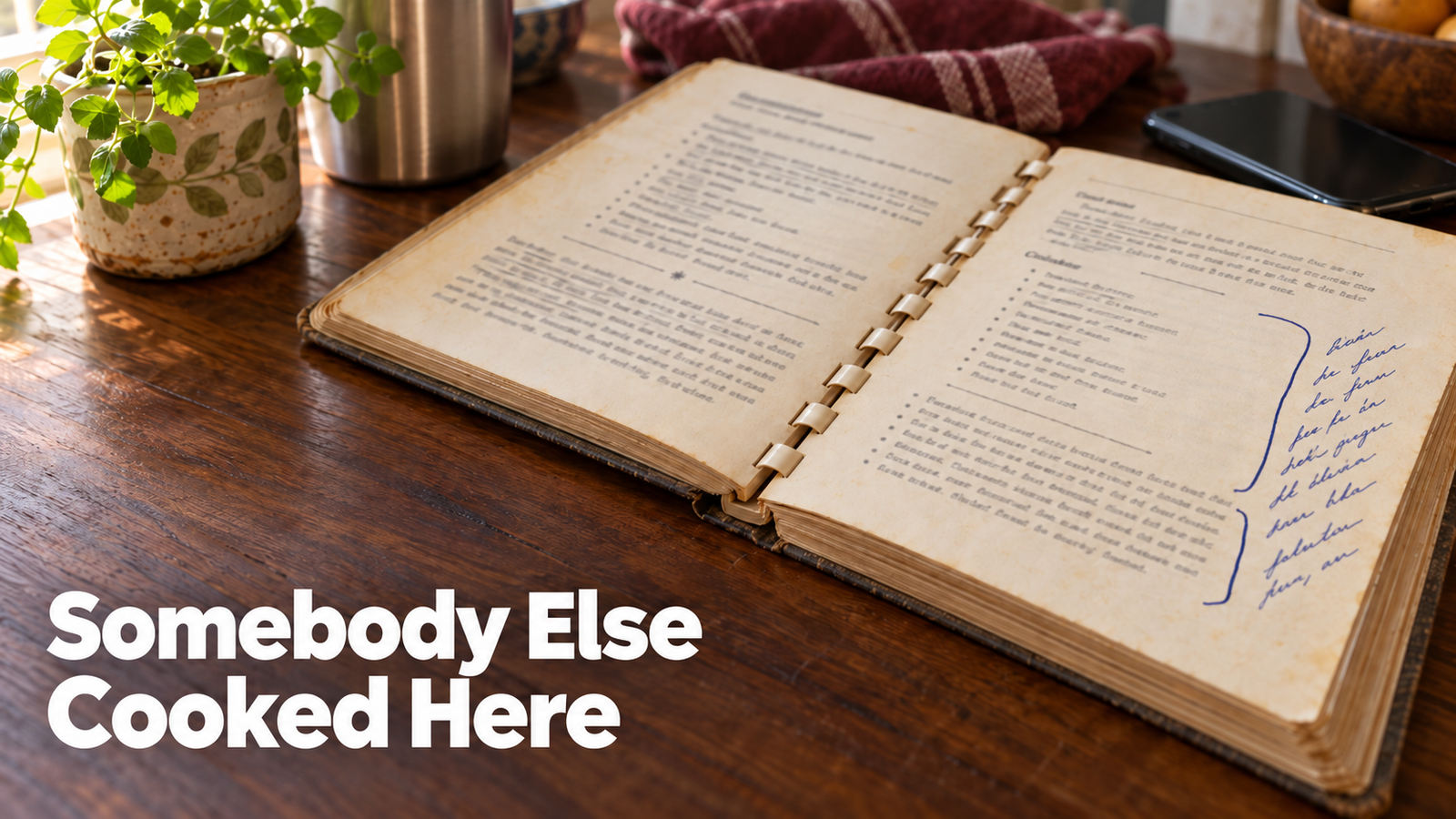
A Good book is honest about its age. There may be a name in the front cover. There may be a stain on the back board or a soft spine. A cookbook in this grade might have a recipe splatter or a turned-down page corner. Good does not mean broken. It means lived with. For a reader who plans to actually read the book, or for a baker who plans to actually use the cookbook, Good is often the smarter choice. Cheaper too.

4. Fair

Heavy wear, damage, or markings. Still useful or collectible for the right buyer.


Fair is honest about being a working copy. Boards may be loose. There may be a tear, a chipped spine, a faded cover, or notes from a previous owner. I only list a book at Fair when there is still a reason to want it — a scarce title, a beloved illustrator, a recipe set you cannot find anywhere else. When I list at Fair, I explain exactly why this copy is still worth choosing.


That is the whole grading system. Four words. No mystery.

What I Actually Look For

Before I list a single book, I go over it the same way every time. Not because I have a checklist on the wall, but because after years of this, the steps just happen.


I check the boards first. Are they tight? Do they sit square? If they are loose or sliding, that goes in the notes. A healthy old book makes a quiet sound when it opens. A sick one creaks in a way you can feel.


I look at the spine, the corners, and the edges of the text block. I run my thumb along the page edges to feel for foxing, tide marks, or any rough patch the eye might miss.


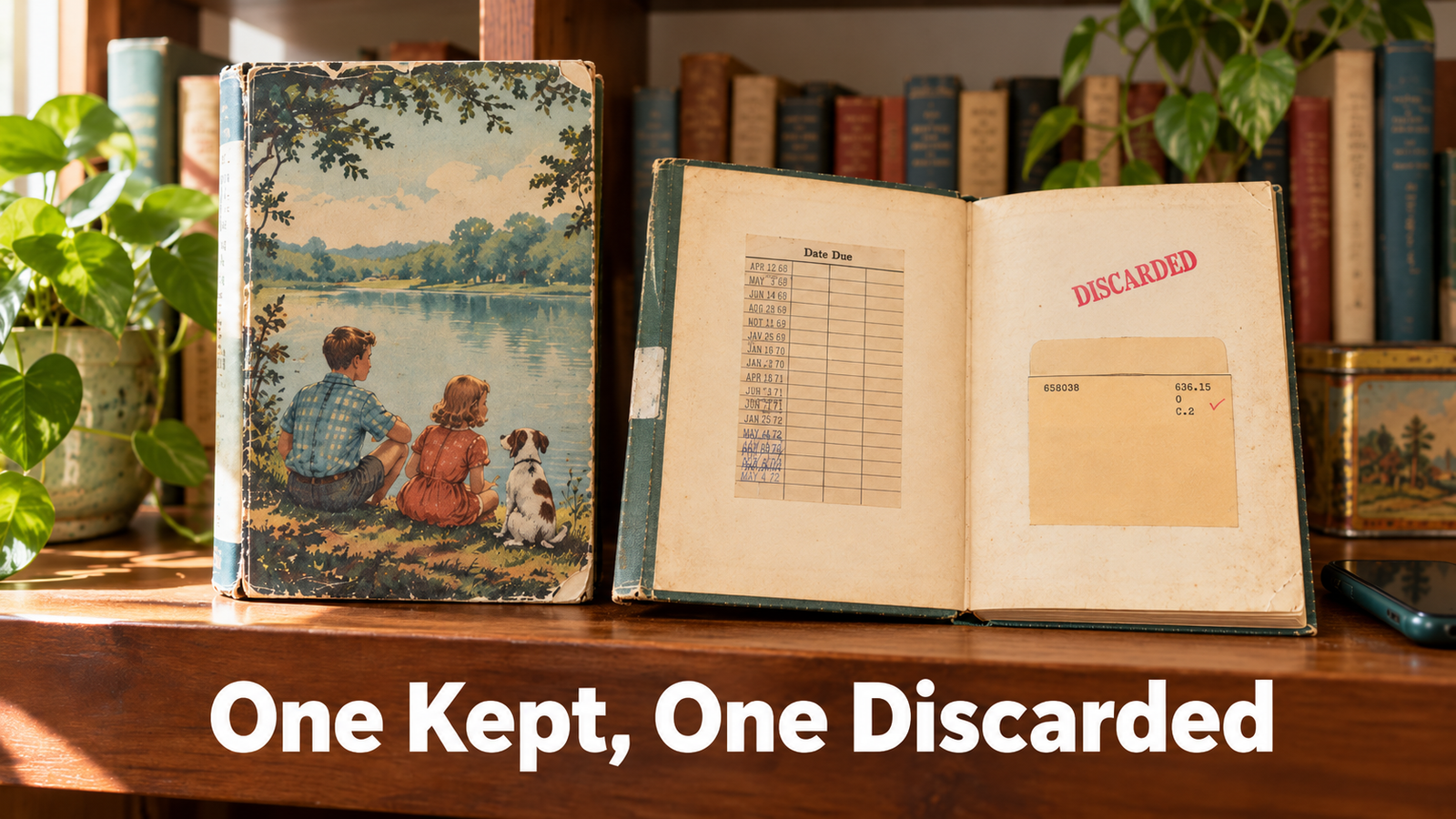
I check inside. Names, inscriptions, gift notes, tucked-in cards, pressed flowers — all of it. Sometimes that history is the whole reason the book is worth choosing. Sometimes it is a deal breaker for the buyer who wants a clean copy. Either way, you get to know about it.


I smell the book. I know how that sounds. But smell tells the truth about a book faster than any other test. Old paper and binding glue have that well-loved smell that tells you someone actually read this. Mildew has a smell too, and it is not the same one. If the smell is wrong, the book does not get listed. Full stop.


Then I photograph everything in good daylight, with a magnifier on the fine details, before I write a word.

What the Photos Are For

Every listing on Reading Vintage has ten or more photos. That is not me showing off. That is me trying to put the book in your hands as best I can from across the internet.


You will see the front and back covers. The spine. The top and bottom edges. The endpapers. The title and copyright page so you can check the edition yourself. A clear shot of the binding from the inside. Any flaw I called out in the grade. Any inscription, stamp, or sticker. For a cookbook, you will see the pages a cook actually cares about — recipes, the index, handwritten notes in the margins.


The written grade tells you the headline. The photos tell you the truth.


If you want a photo of something you do not see, ask me. I will take it and send it before you buy. That is part of the deal.

A Note for Collectors and a Note for Readers

Condition means two different things depending on who you are.


If you are a collector, you are usually looking for the cleanest, tightest copy you can find. Dust jacket present and unclipped. No marks inside. Boards bright. For you, Near Fine and Very Good will matter most, and edition details will matter more than they would to a casual buyer.


If you are a reader or a memory keeper, you are usually looking for a copy that feels right. You may actively want a cookbook with a recipe splatter on the chocolate cake page, because that is the page someone else loved too. For you, Good and even Fair can be the right call.


I list with both of you in mind. The grade is honest either way. What changes is which grade is right for you.

Frequently Asked Questions

Q. What is the difference between wear and damage?

Wear is the soft, even use a book picks up across a life. Damage is something that hurts how the book works — loose boards, torn pages, water damage, missing pieces. Wear adds character. Damage takes something away. I will always tell you which one you are looking at.

Q. Do you ever sell books with writing inside?

Yes, often. A child's name in pencil, a gift inscription, a previous owner's marginal notes, a recipe correction in a cookbook — these can all add to a book's history. I show writing in the photos and call it out in the description so you can decide if it adds to the book for you or not.

Q. What if the book arrives and I am not happy with the condition?

Reach out. I would rather hear from you than have you stuck with a copy that does not fit. If something was off in my description or my photos missed a flaw, that is on me and I will make it right.

Q. Why don't you use collector terms like "first thus" or "VG/VG-"?

Because most of my buyers are not bidding at auction. They are choosing a book they want to live with. Collector shorthand is useful inside the trade, but it makes everyone else feel locked out. Plain English is a kindness.

Q. Should I ask questions before I buy?

Always. I would rather answer five questions and sell you the right copy than send you one you are not sure about. Message me through the shop and I will reply with photos, measurements, or whatever else you need.

A Personal Word Before You Go

Trust is the whole point of what I do. Before the charm, before the nostalgia, before the pretty photo with the linen napkin in the background — trust comes first. If you cannot trust the description, none of the rest of it matters.


So here is my promise. I will describe what I am selling honestly and show it clearly. I will tell you what is wear and what is damage. I will tell you when a flaw is part of the story and when it is the reason to keep looking. If I do not know something, I will say so. And if the smell is wrong, the book does not get a listing.


Availability is not the same as the right copy. I would rather help you find the one that fits your memory and your shelf than push you toward the first copy I have on hand.


Have a look through the shop and scroll down to the Condition Grade on any listing that catches your eye. If you have a question, send it. That is the part I like best.


pam of reading vintage Author Bio: Pam of Reading Vintage

Pam is a vintage bookseller working out of Michigan. She finds old classics, fun collectibles, and hidden literary gems at estate sales and country auctions. When she is not sorting through a stack of cookbooks, you can usually find her walking in the woods with her dog or curled up with a good read.


Continue Reading

Vintage Book vs. Mass-Produced Gift: Which One Actually Feels Personal?

May 20, 2026

A customer asked me to find the woodworking book her late father once owned. She was buying it for her brother’s 50th birthday. The mass-produced gift store option was a hardware-themed novelty mug. She bought the book. Here is why specific almost always beats expensive.


Continue Reading

Why “Available Online” Is Not the Same as Finding the Right Vintage Book

May 20, 2026

Most online vintage book listings hide more than they show. A search result is not the same as a real decision. Here is what separates an available copy from the right one, and how to spot the difference before you click buy.


Continue Reading

Clean Copy vs. Lived-In Copy: Which Vintage Book Is Right for You?

May 19, 2026

Two copies of the same vintage book, same year, same publisher. One looks untouched. The other has a coffee ring on page 47 and a 1968 inscription. Which one is the right copy? It depends on what the book is for.

Continue Reading

Character or Damage? How to Judge an Old Book Before You Buy

May 18, 2026

Character adds to the book. Damage asks you to make excuses for it. Here is how a vintage bookseller tells the two apart before she buys, and how you can do the same.

Continue Reading

Reprint or Original Vintage Copy: Which Should You Choose?

May 15, 2026

Sometimes a buyer isn't looking for a book. They're looking for someone. Here's why the exact cover, the exact edition, and the exact details matter when a vintage book is also family memory.

Continue Reading

Why People Search for the Exact Books Their Parents Owned

May 15, 2026

Sometimes a buyer isn't looking for a book. They're looking for someone. Here's why the exact cover, the exact edition, and the exact details matter when a vintage book is also family memory.

Continue Reading

Digital vs Vintage Books: What You Lose on a Screen

May 14, 2026

Pam, vintage bookseller in Michigan, on the quiet difference between a searchable digital file and an ownable vintage book. What gets lost on a screen, why most ebook "purchases" are actually licenses, and when each format is the right copy for the job.

Continue Reading

Vintage Books: Keepsake or Clutter? How to Tell the Difference

May 14, 2026

Pam, vintage bookseller in Michigan, on how to tell whether an old book belongs on your shelf as a keepsake — or in the donation pile as clutter. A five-question test, the story behind it, and why availability is not the same as the right copy.

Continue Reading

What Are the Best June Book Club Themes — And Why Does the Right Vintage Copy Change the Whole Discussion?

May 12, 2026

A vintage bookseller's plain-English guide to picking June book club themes — Pride classics, Father's Day reads, summer escapes, and the cookbook meeting — plus why the right vintage copy turns a June meeting into something the group still talks about in

Continue Reading

1 2 3 … 34 Next
The best vintage books usually find their reader fast.

If you'd like first look, sign up for the newsletter. New finds, author spotlights, and the occasional bookish aside right to your inbox.


  • Privacy Policy
  • Data sharing opt-out
  • Terms of Service
  • Shipping Policy
  • Refund Policy
  • About Reading Vintage

© 2026 Reading Vintage. 4215 Dyckman Road Midland Mi. 48640 Powered by Shopify

American Express Apple Pay Diners Club Discover Google Pay Mastercard PayPal Shop Pay Visa